 PRODUCT TALES // IT-FICTION
The Friday 4 PM Red Alert
Part 1 of the Security Theatre Saga: How a CVSS 9.8 score froze a $500k enterprise deal without making the platform a single bit safer.
PRODUCT TALES // IT-FICTION
- Company: CoreShift Systems (Enterprise B2B SaaS)
- Characters: Tom Carver (VP of Product), Arthur Pendelton (CISO), Elena Vance (Staff Architect)
- Core Friction: Theoretical vulnerability severity vs. real-world architectural exploitability.
It was Friday at 4:12 PM. Tom Carver, VP of Product at CoreShift Systems, was 48 hours away from closing the largest enterprise contract of Q3. The new multi-tenant reporting engine was fully validated, signed off, and scheduled for a quiet Sunday night deployment.
Then Arthur Pendelton’s name flashed across Tom’s screen in bright red on Slack.
[P0-SECURITY-ALERT] Critical vulnerability detected in core container image. CVSS Score: 9.8. All deployment pipelines frozen until further notice.
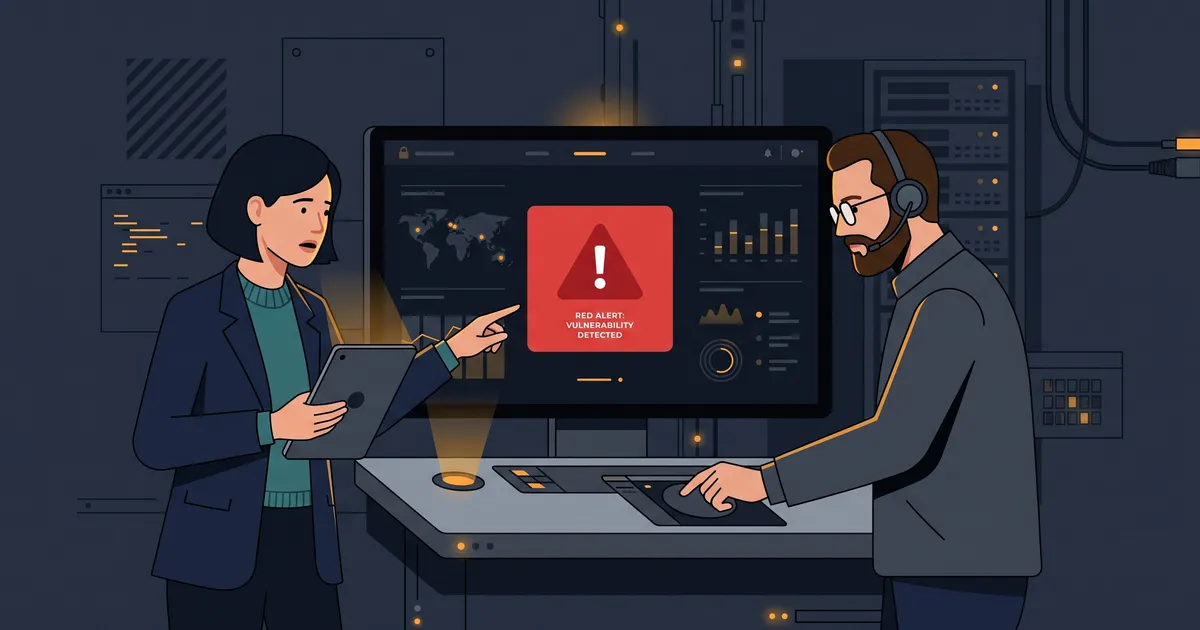
Ten minutes later, Tom, Arthur, and Elena Vance were huddled in the war room. Arthur’s CISO dashboard was glowing like a radioactive reactor.
“A 9.8 CVSS rating is an immediate code red,” Arthur declared, gesturing at the screen. “The vulnerability allows arbitrary remote code execution via an unpatched XML parser in an auxiliary worker library. Company security policy is crystal clear: zero known critical vulnerabilities on production.”
Elena Vance, Staff Solution Architect, pulled up the network topology diagram.
“Arthur, look at where that container actually lives,” Elena said calmly. “That XML parser is only invoked by an offline background worker inside an isolated VPC. It has no public IP, zero ingress routes, sits behind a restricted IAM role, and operates exclusively on encrypted internal data. To exploit this, an attacker would already need root access to our cloud infrastructure—at which point an XML parser vulnerability is the absolute least of our worries.”
“The CVSS framework rates it a 9.8, Elena,” Arthur replied, unwavering. “Our external auditors don’t inspect topology diagrams. They read scanner export logs. If the board sees red items on the dashboard, we risk our SOC2 compliance status.”
Executive leadership panicked. The Sunday release was cancelled.
For the next two weeks, the entire engineering team was pulled off the strategic roadmap. They burned 320 engineering hours forcefully upgrading the legacy framework stack just to patch a secondary library. The hasty upgrade introduced two regression bugs into the billing service, stalling the staging environment for another four days.
The enterprise prospect, frustrated by the missed delivery date, deferred contract sign-off into the next fiscal quarter.
The Untangled Takeaway
CVSS scores measure theoretical severity in a vacuum, not actual exploitability within your system architecture.
Treating every automated scanner alert as a P0 emergency—without factoring in network isolation, IAM boundaries, and Defense-in-Depth—turns cybersecurity into an expensive compliance theatre that paralyzes delivery throughput while adding zero real-world resilience.