 PRODUCT TALES // IT-FICTION
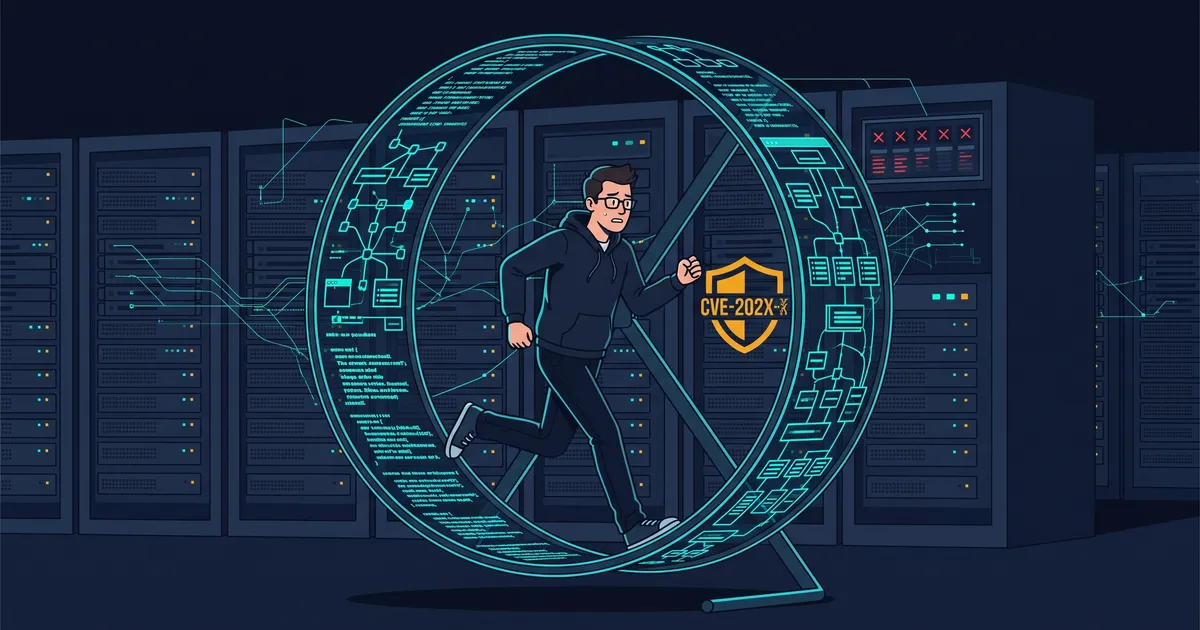
The Patching Treadmill
Part 2 of the Security Theatre Saga: How a strict "Zero Known Vulnerabilities" policy turned engineering velocity into a never-ending cycle of dependency churn.
PRODUCT TALES // IT-FICTION
- Company: CoreShift Systems (Enterprise B2B SaaS)
- Characters: Tom Carver (VP of Product), Arthur Pendelton (CISO), Elena Vance (Staff Architect)
- Core Friction: Compliance-driven dependency churn vs. product delivery velocity and system stability.
Three months after the Friday XML incident, Arthur Pendelton successfully pushed a new mandate through executive governance: The Zero Known Vulnerabilities Policy.
From that day on, any pull request containing a dependency with a published CVE—regardless of severity rating, network boundary, or attack vector—was automatically blocked by the CI/CD pipeline.
On paper, CoreShift Systems’ security score reached a flawless 100%. On the ground, engineering velocity collapsed.
Tom Carver pulled up the Q4 delivery burndown chart during the leadership sync. The curve was flatlining.
“We are missing every single roadmap milestone,” Tom said, pointing to the red trendlines. “Feature delivery is down 45%. Customer feedback cycles are stalling. What is eating all our capacity?”
Elena Vance opened the sprint telemetry dashboard.
“We’re running on the patching treadmill,” Elena explained. “Our microservices rely on over 1,400 open-source packages and sub-dependencies. Every single week, dozens of minor patches are published. Because of the zero-tolerance policy, developers spend 40% of every sprint upgrading libraries, resolving breaking API changes, and re-testing legacy modules.”
The policy hadn’t made the platform more secure—it had simply turned developers into full-time package maintainers.
The real breaking point arrived on a Tuesday morning. A routine upgrade of an obscure, deep-nested logging library—forced through pipeline rules to fix a low-severity CVE—introduced a subtle memory leak in the message queue consumer.
The service degraded silently over 72 hours, eventually causing a cascading failure that brought down the primary tenant dashboard for four hours.
CoreShift breached its 99.9% uptime SLA, triggering automated service credits and cost-outages far exceeding any theoretical exploit risk.
The Untangled Takeaway
Blindly chasing dependency updates under the banner of security often introduces more real-world operational risk than the vulnerabilities themselves.
When security governance mandates blind compliance over risk-weighted evaluation, engineering teams exchange theoretical vulnerability for guaranteed instability, trading real business value for clean dashboard metrics.